
Sarana Haeata: The Current
Inside the Margaret River studio of a painter who learned from clay that a work goes further once you stop forcing it.
The women in Sarana Haeata's paintings are rarely standing still. They fall, or float, or tip toward the edge of the canvas with their limbs loosened and their bellies soft, carried by something you can feel but not quite see. They do not look anxious about it. If anything, they look relieved.
Surrender is the word she uses. Not giving up, she is careful to say, but being allowed to exist without scrutiny. It is also, as it happens, the condition she paints in.
"I think feeling comes first. How it looks comes after."
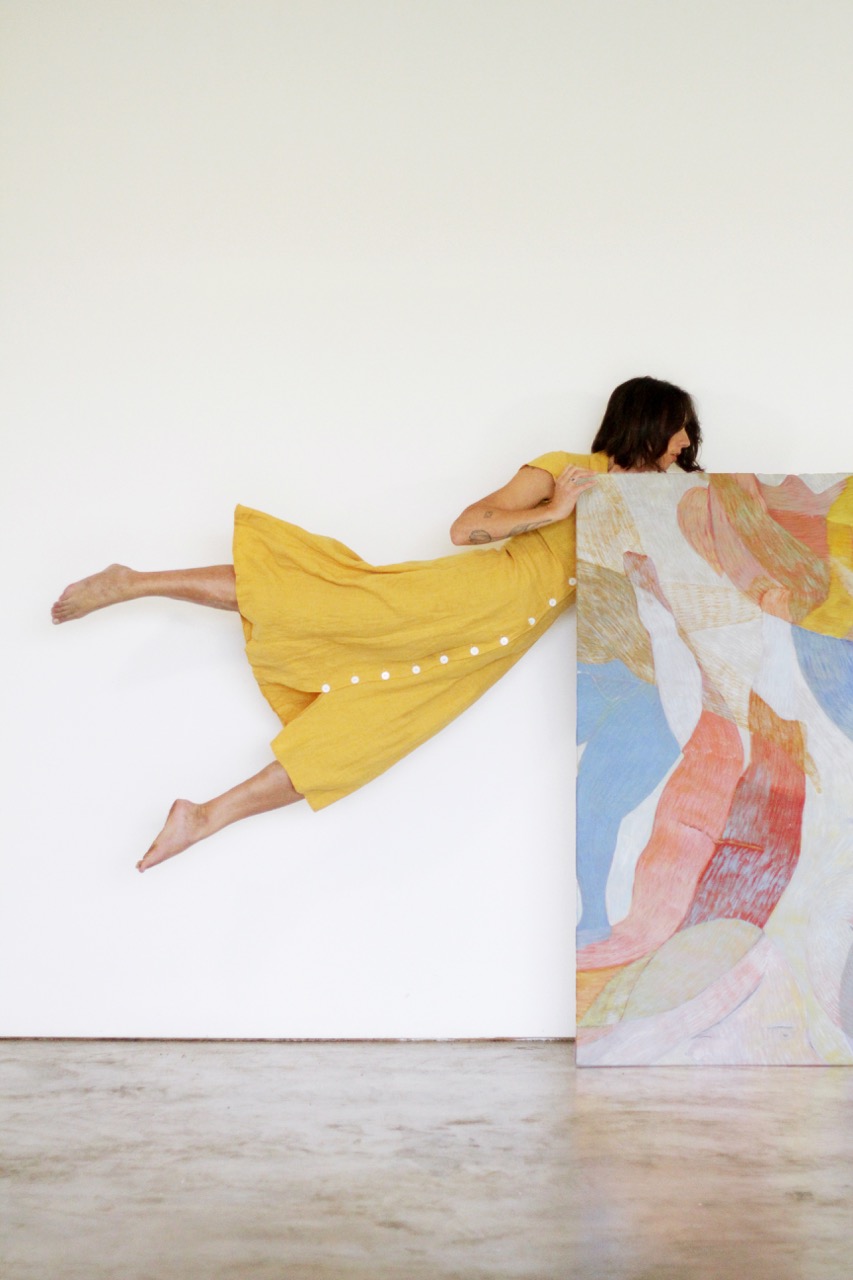
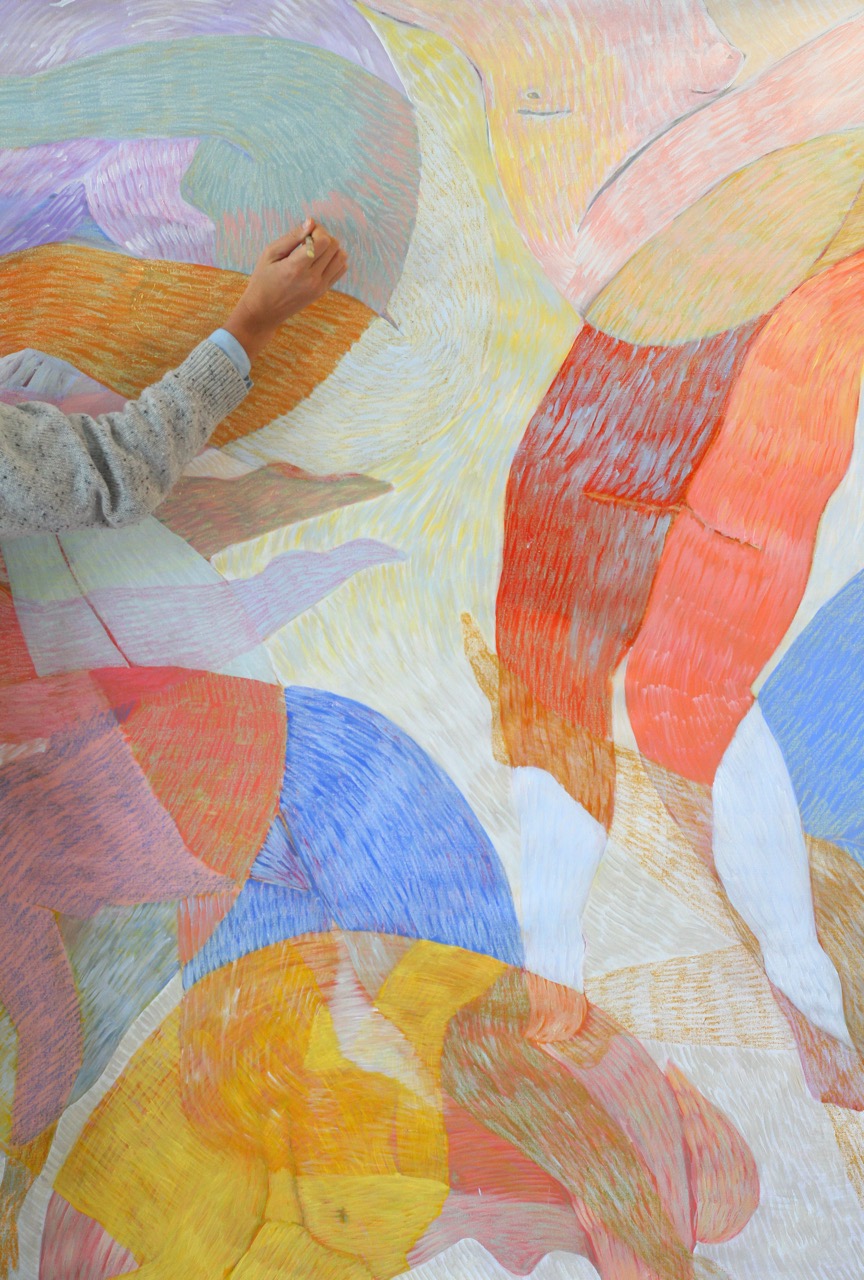
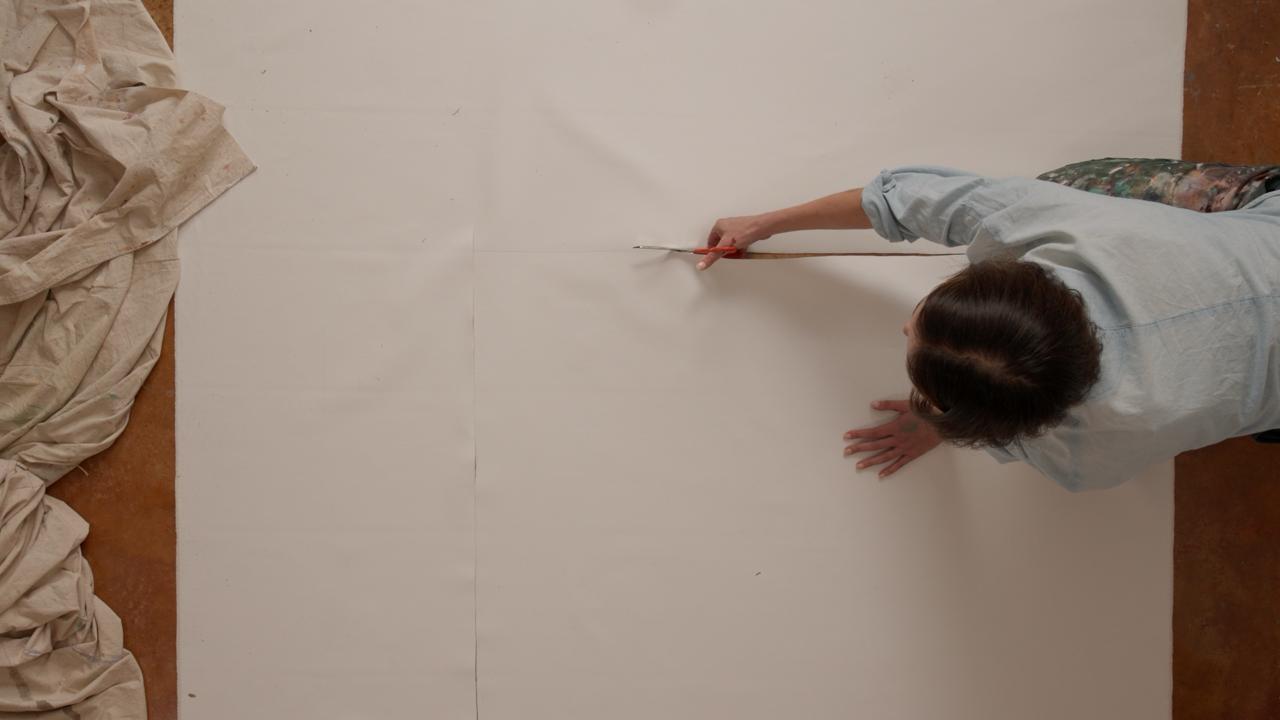
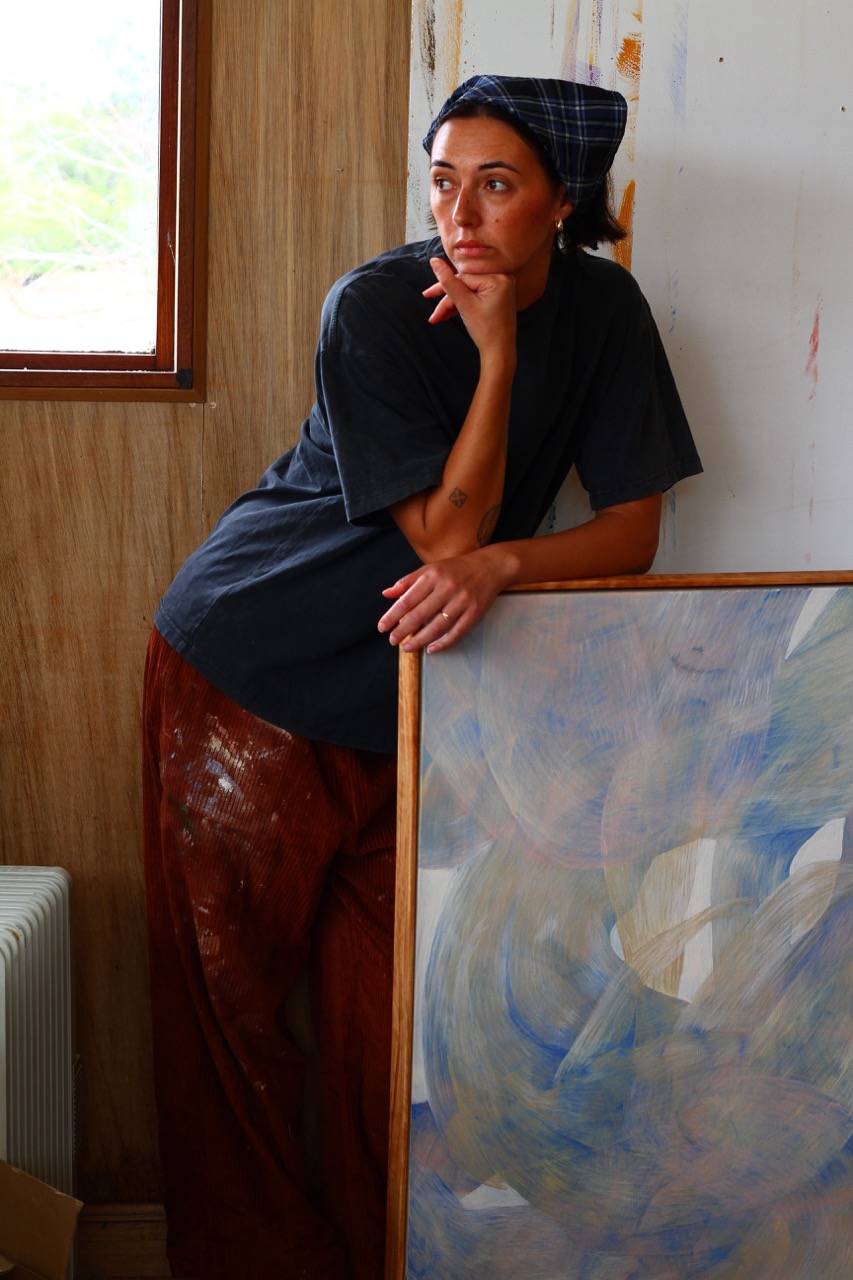
Her studio sits in the green country outside Margaret River, on the southwest coast of Western Australia. The canvas goes straight onto the wall, cut from a roll and stapled up at full size, and her husband, a woodworker, stretches and frames each one once it is finished. On the morning we spoke, the painting up on that wall was, in her words, doing her head in.
She grew up with paint within reach. Her father is an oil painter, and he was also her teacher at the Steiner school she attended, where every lesson, maths and science included, came with an artwork. Making things was so ordinary it never registered as a career. As a teenager, what she really wanted was to join the circus. At twenty-two, pregnant with her first child, she realised that whatever else she did, she would still be making art, so she might as well make it the work.
What followed was a decade of making in the margins: four children, workshops and murals, watercolours painted in the space of a nap. And for seven years, a ceramics business, largely because clay asked less of her than a canvas did. A pot could be started and finished. It never had to carry the full weight of a painting.
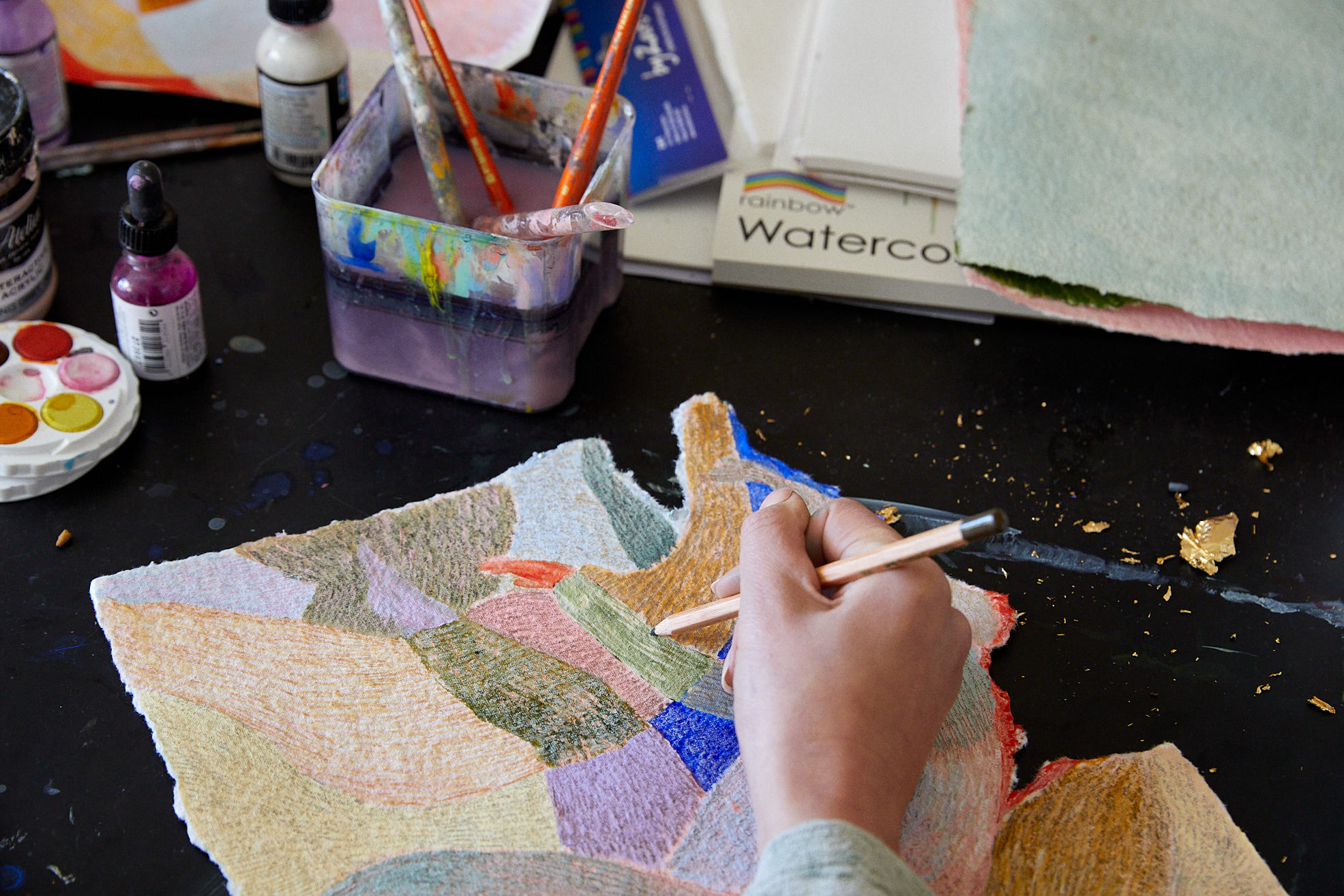
Still, the clay taught her things she has kept. Texture, first of all. And a willingness to give up control she had never needed at the easel. Hand a pot to the kiln and it shifts the glaze, shrinks the form, occasionally blows it apart, and hands back something other than what you pictured.
"You kind of have to listen to your material a bit more than, say, you would painting, where you can kind of force what you want onto it."
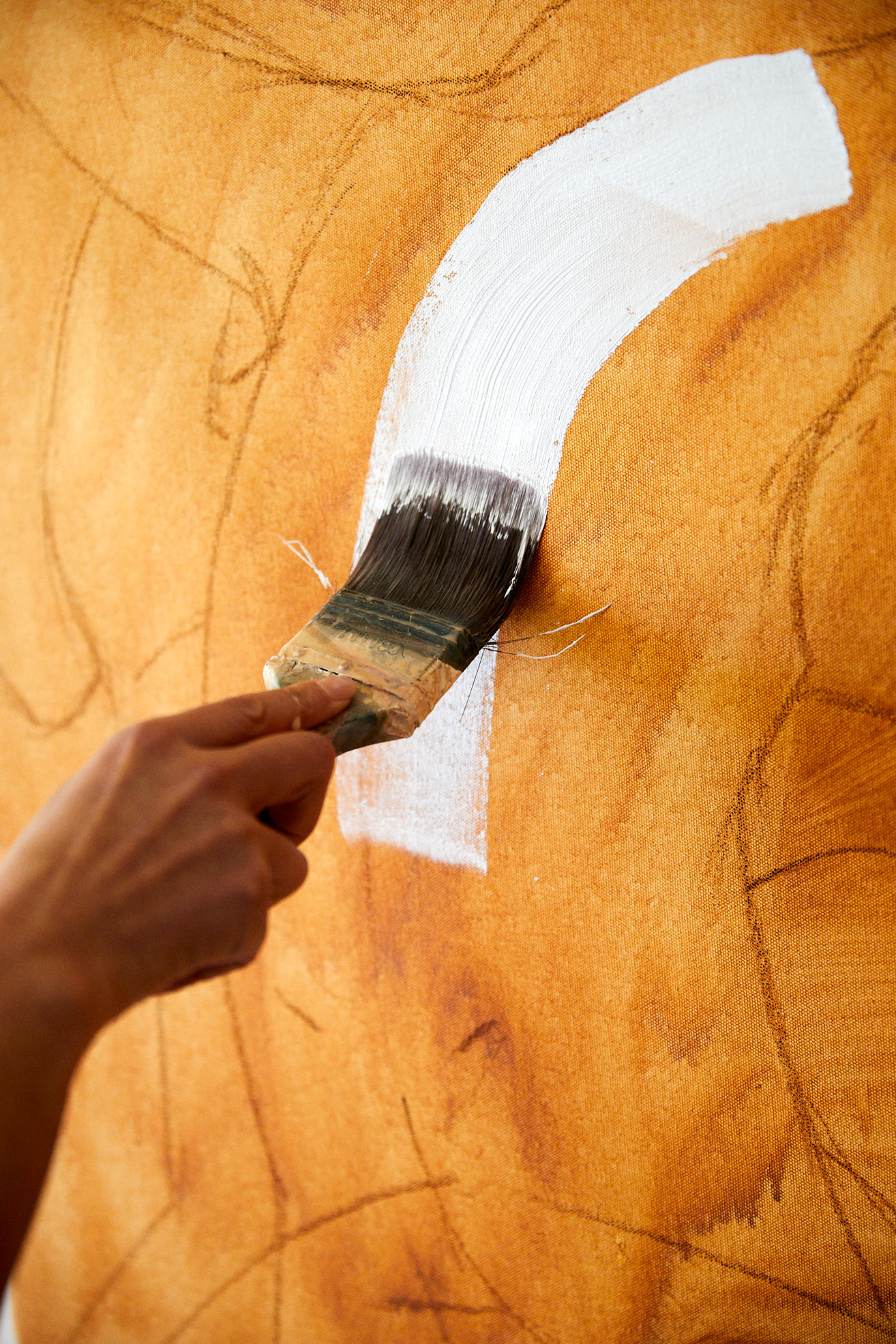
She paints that way now. There is no sketch and no plan, and when a mark lands somewhere she did not intend, she looks for a way to use it. She now sees that scattered decade as a long, unofficial art education.
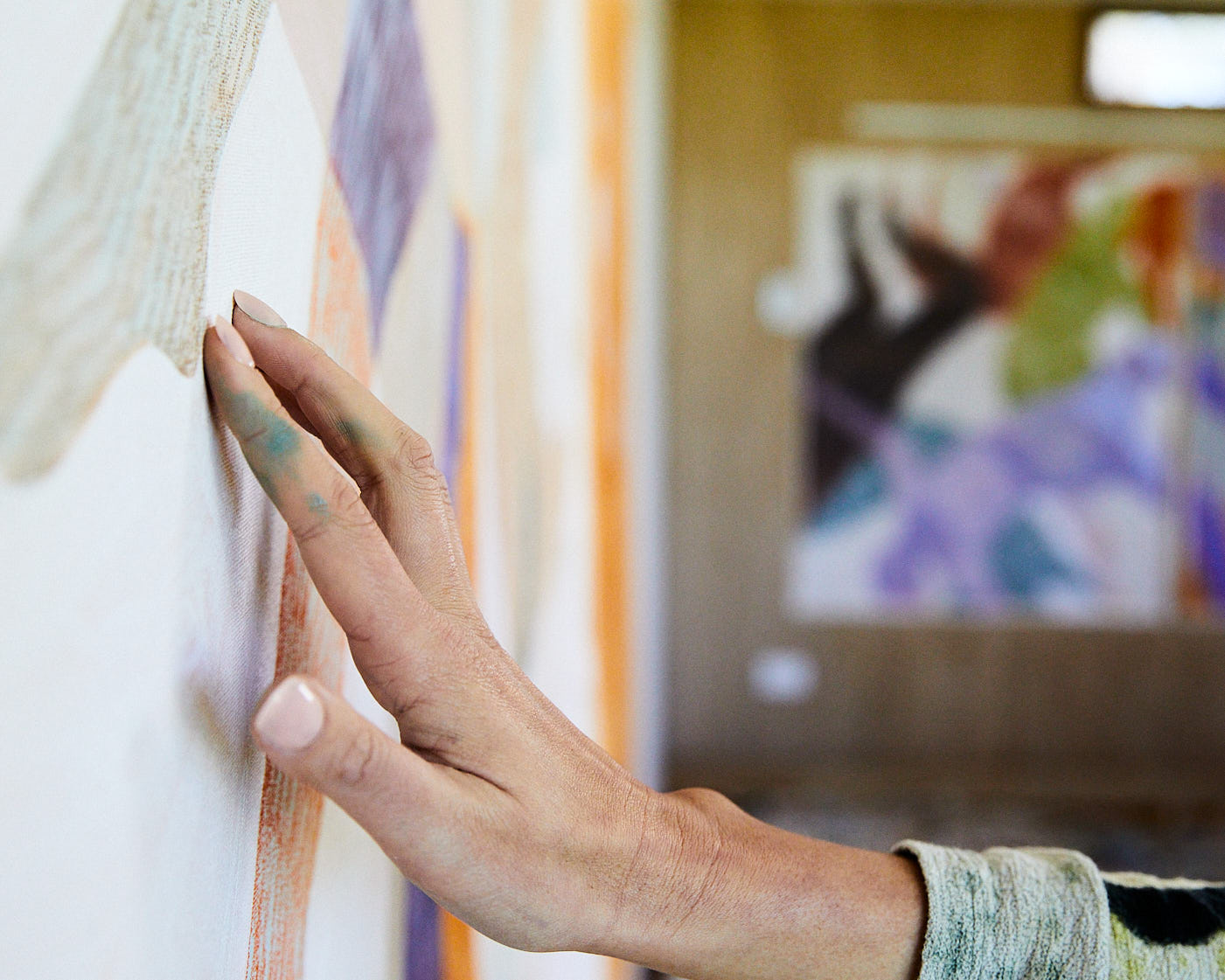
The figures came anyway.
Her first solo exhibition opened in 2023. The style that now makes her work recognisable from across a room began just before that, in a two-week stretch she calls an at-home residency. Her husband took the children away, and she made herself one promise: nothing painted in those weeks would be for sale, or for anyone else to see.
She had always assumed she would be an abstract painter, and she was quite clear with herself that she did not want to paint naked women. But pure abstraction never quite said what she needed it to say. The figures kept arriving. Looking back, she found them in her old watercolours too, already falling.
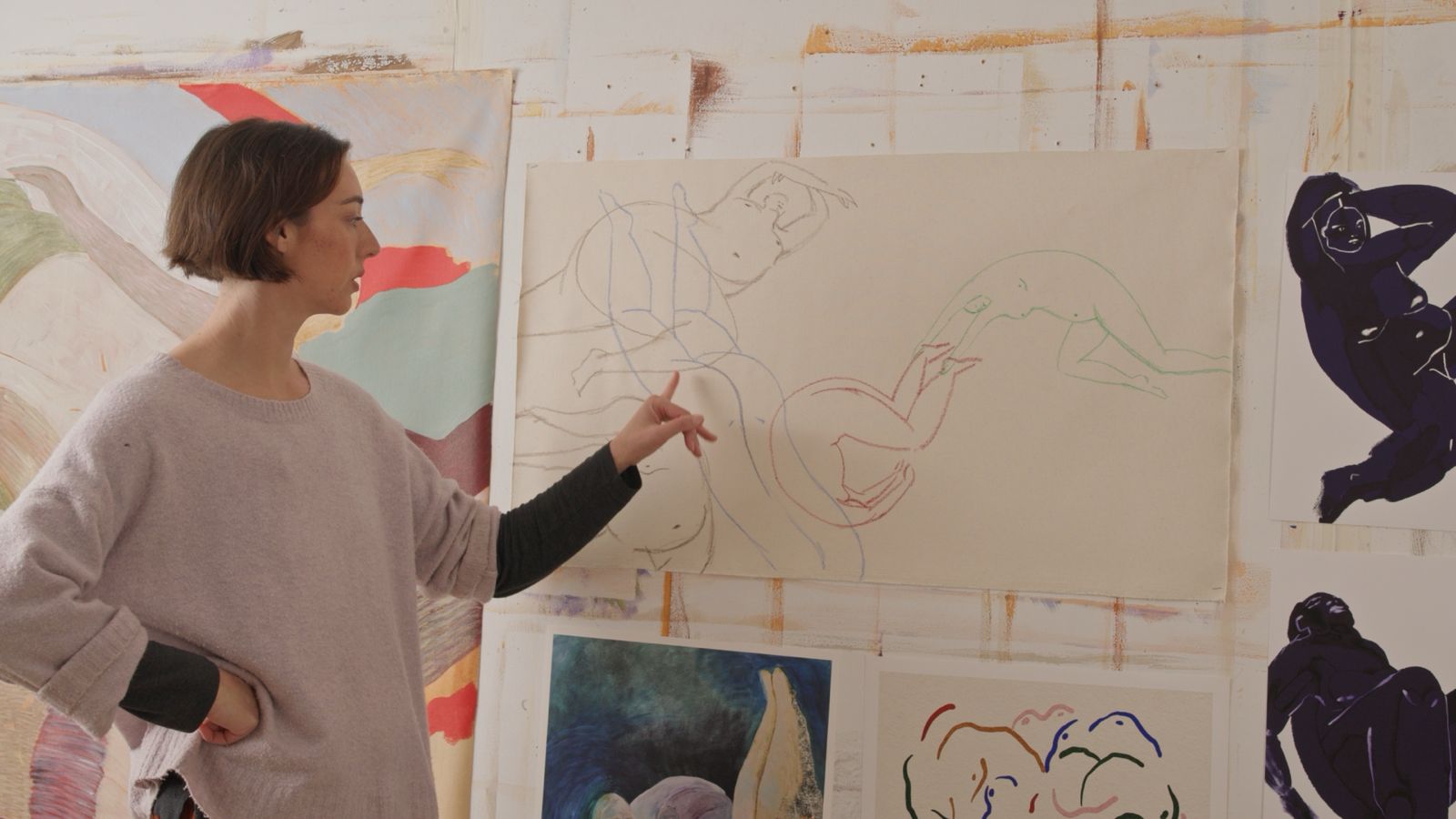
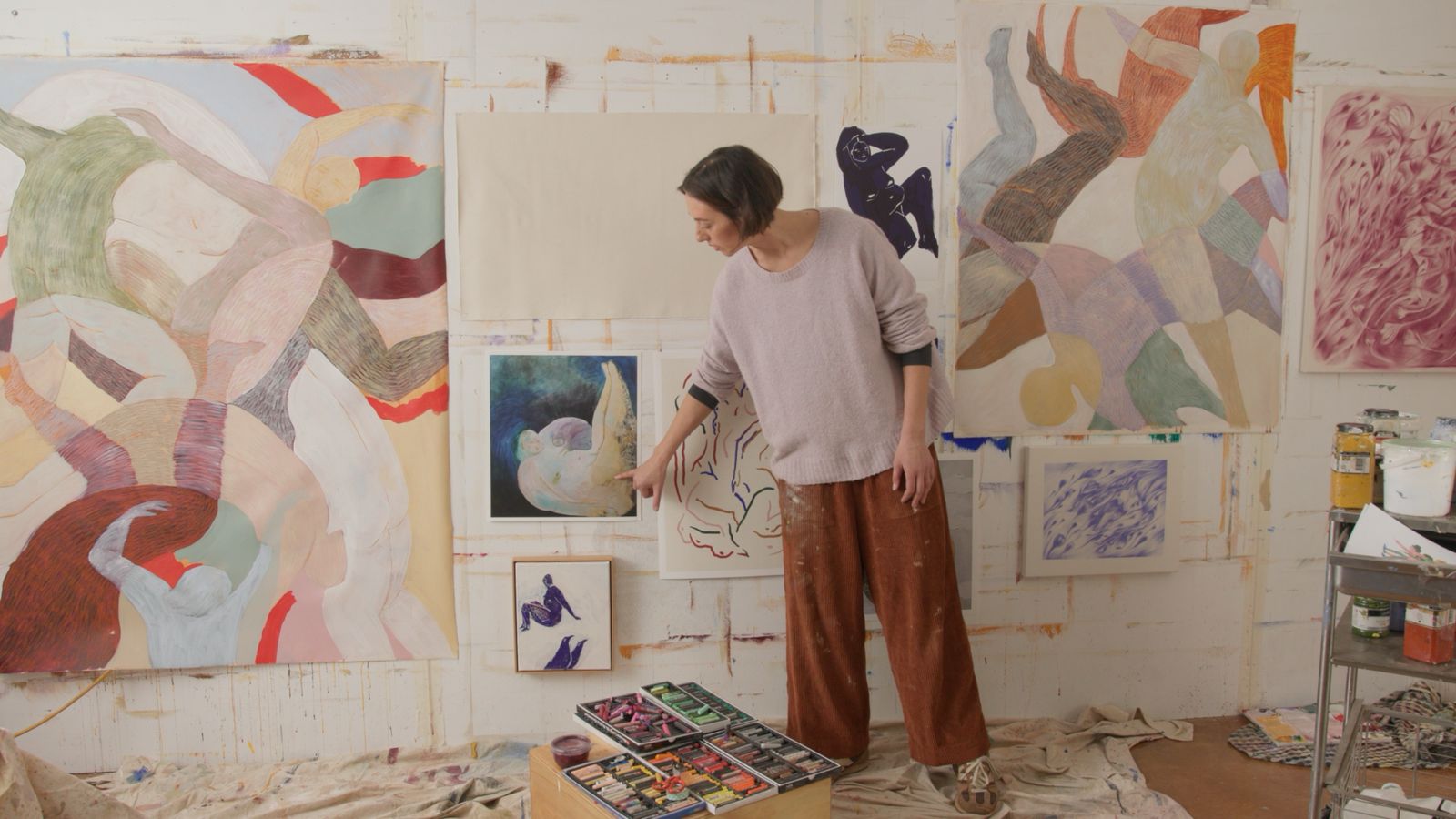
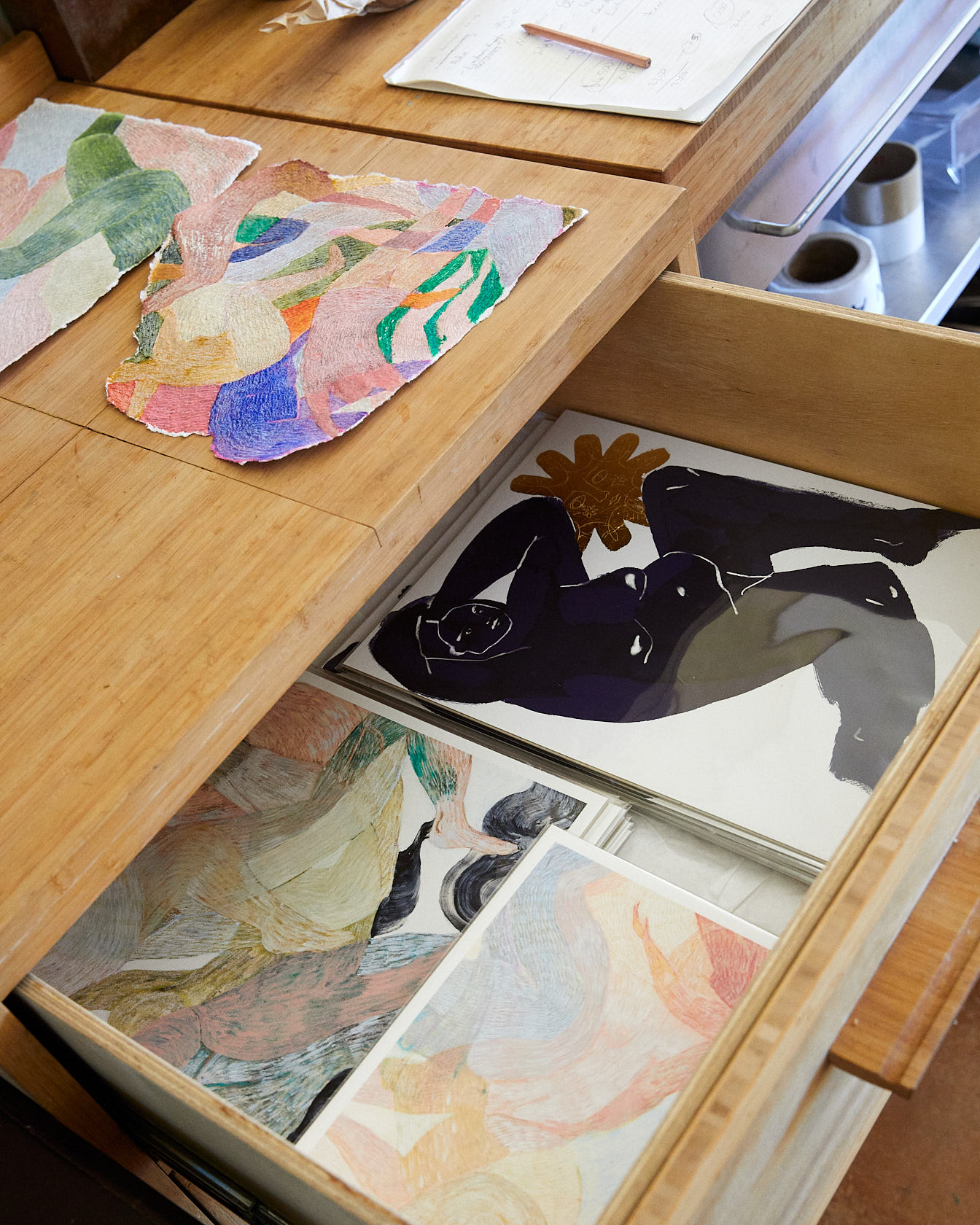
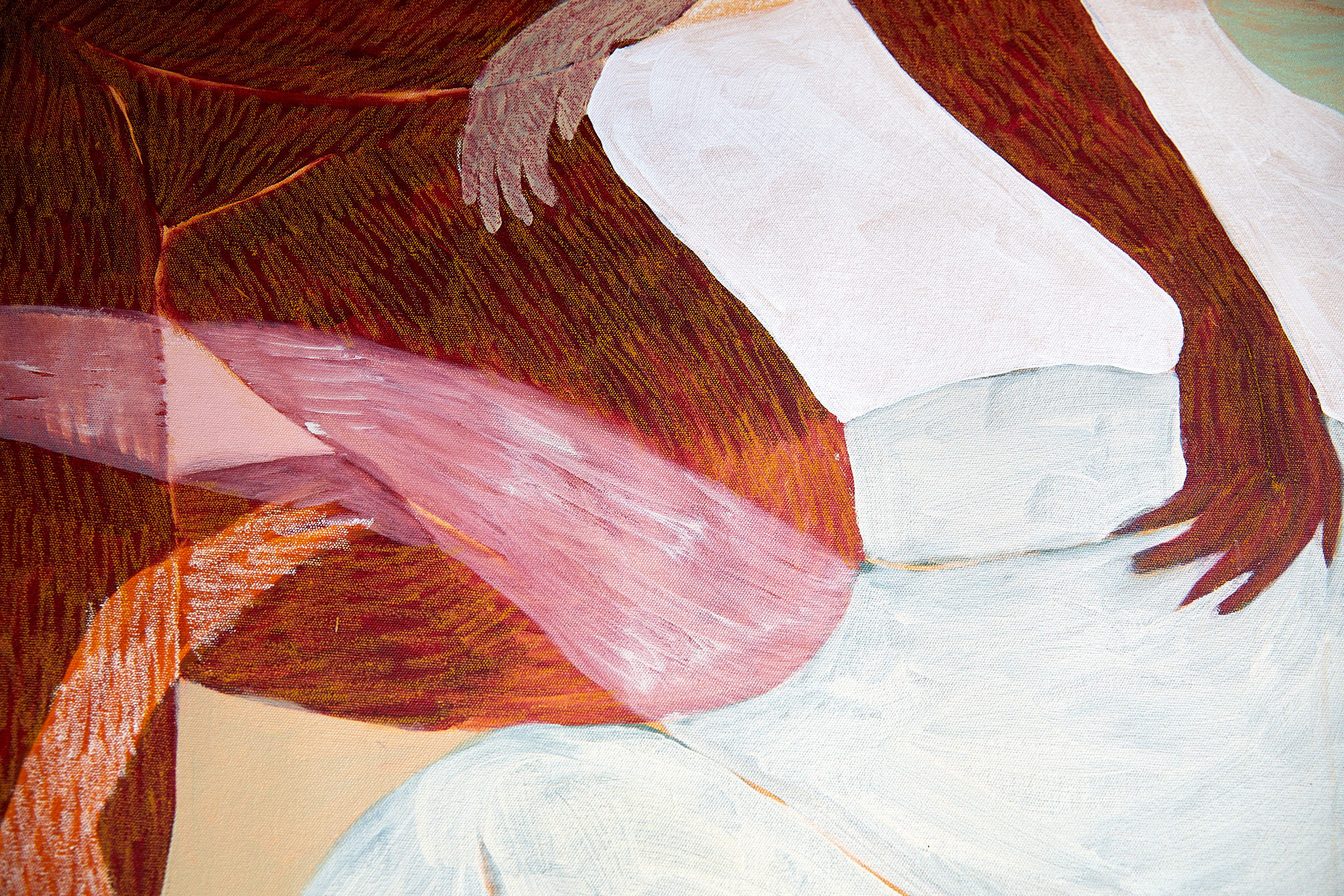
The first women of the new work were still, sitting alone with a great deal of space and quiet around them, which was exactly what she wanted for herself at the time. As life steadied, they began to move. The recent paintings are about finding calm inside motion, about going with the current rather than pushing against it.
"I'm always kind of painting the internal landscape of where I am, or what I'm missing in my life. What I need more of."
The bodies are loose by design. Bellies, full thighs, generous curves, rarely anything athletic. She does not want them sexualised or under any pressure to be a particular shape. She draws them without reference, and over the years they have grown wonky. She likes them that way.
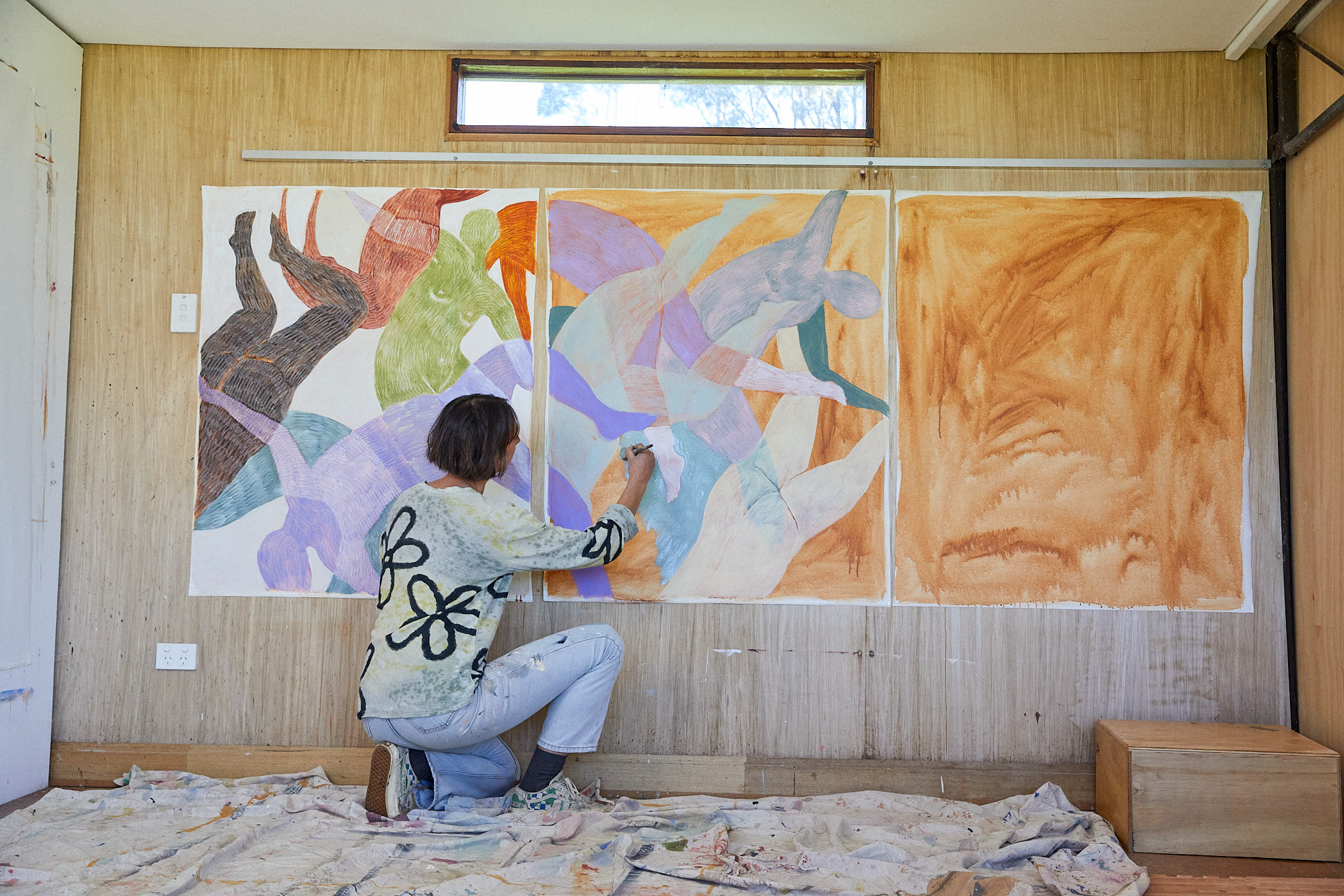
Outside the lane.
You can see the movement in the work before you know where it comes from. Dance is one of her strongest influences, along with sculpture and photography, and she turns to them on purpose.
"It's almost like a safer or more rich playground to create from."
She rarely photographs what moves her. At a performance she might reach for her phone, but only to open the notes app. She writes down words: a mood, a feeling of nostalgia, something about breaking free. Sometimes a colour pairing, a flash of red against a green light. Then she lets time do some of the work. By the time she returns to the notes, the memory has gone a little hazy, and she likes that. The distance between the moment and her reinterpretation of it is where the abstraction happens.
Music matters too. For years the piano of Akira Kosemura has been her signal to focus, a cue her mind now recognises the moment it starts.
"I don't necessarily want to just go and paint the dancer. It's more about what that dancer has ignited in me."
What she keeps out matters just as much. Painters now are flooded with images of other artists' work, and in her view it muddies the waters. When another artist's work starts to needle her, she reminds herself that it is theirs to make. "That's their thing to say," she says. "It's not my thing to say."
The quiet extends to her own head. Most people, she thinks, carry a constant commentary while they work. That doesn't look right. I'll never fix it. The first step is noticing the voice, and the second is telling it to be quiet. She begins every painting with a short instruction to that effect. It is, she says, how she gets out of her own way.
She keeps several canvases going at once, so she can step away from one that is fighting her. And she turns up, even on days when she spends hours with a painting and gets nowhere at all. Showing up, she insists, still furthers the practice.
That matters, because every painting she makes goes wrong at some point. She starts somewhere low in stakes, a knee or a hip rather than a face, and works outward without a plan until the canvas comes together like a jigsaw.
"Every painting has an ugly phase, and then it's about how well I can problem solve that."
She doesn't start over. She asks what feels wrong, gets one corner right, then the next, painting thinly enough that her earlier decisions still show through. The question she keeps returning to is how a bad layer might make the next one better. She works large because she wants the viewer to be completely engulfed by the finished painting.
"The paintings where I've made the most mistakes are the ones that turned out to be the best."
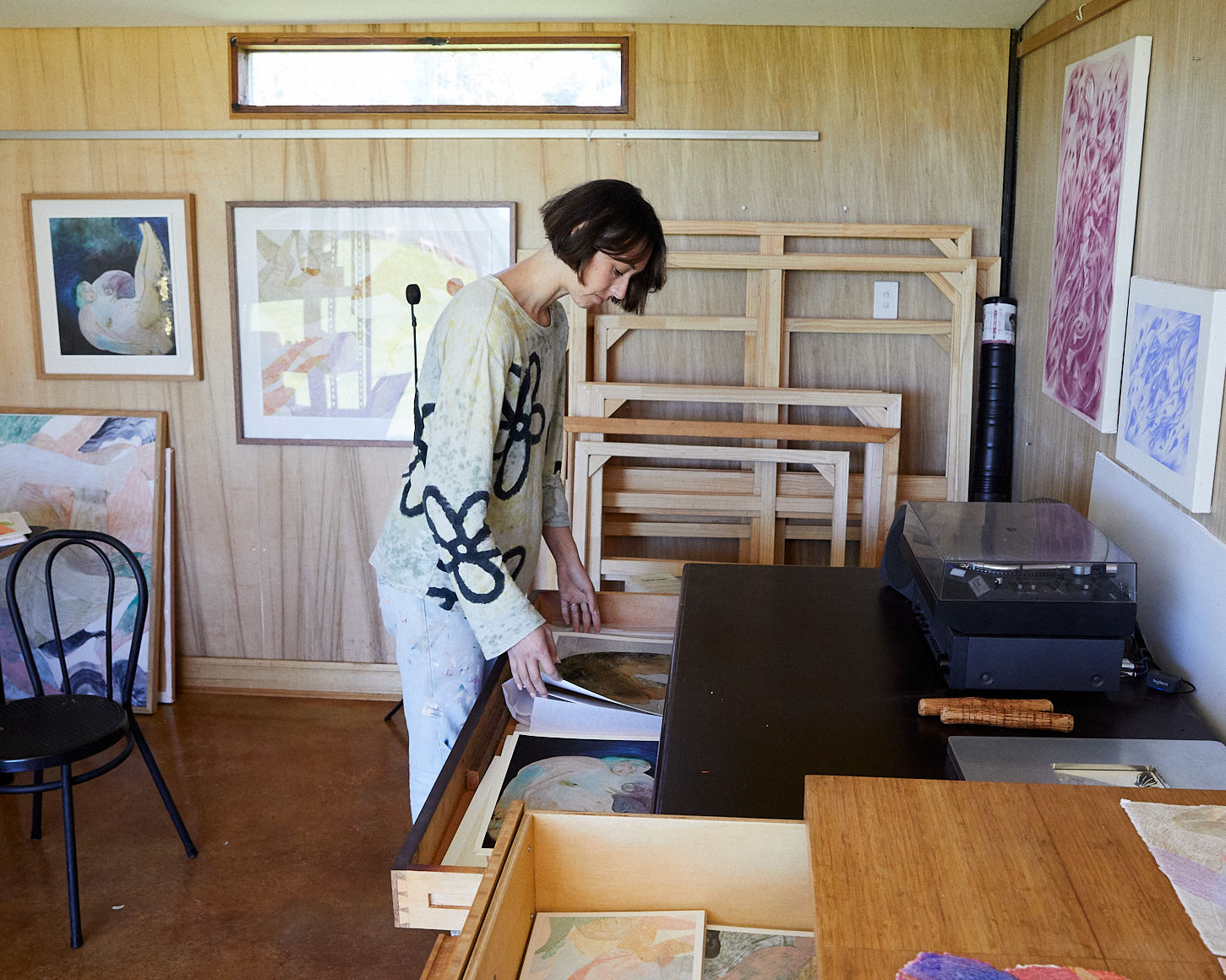
Her paintings now hang in private collections across Australia, the United States, Denmark, France and the UK, and in 2025 she was a painting finalist in the National Emerging Art Prize. None of it arrived by plan, which seems right. The women keep falling, and she keeps letting them.
Sarana Haeata's course, Layered Movement, is available now on Arteway. It is the first time she has taught her full process, following a single painting from its first grounding mark to the final layer of oil pastel, filmed in her Margaret River studio.
