New online course

Finding the Flower

with Gabriella Voogt

Trusting the process

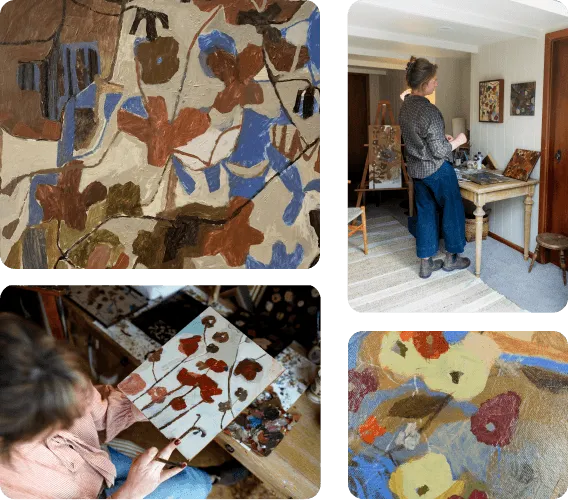
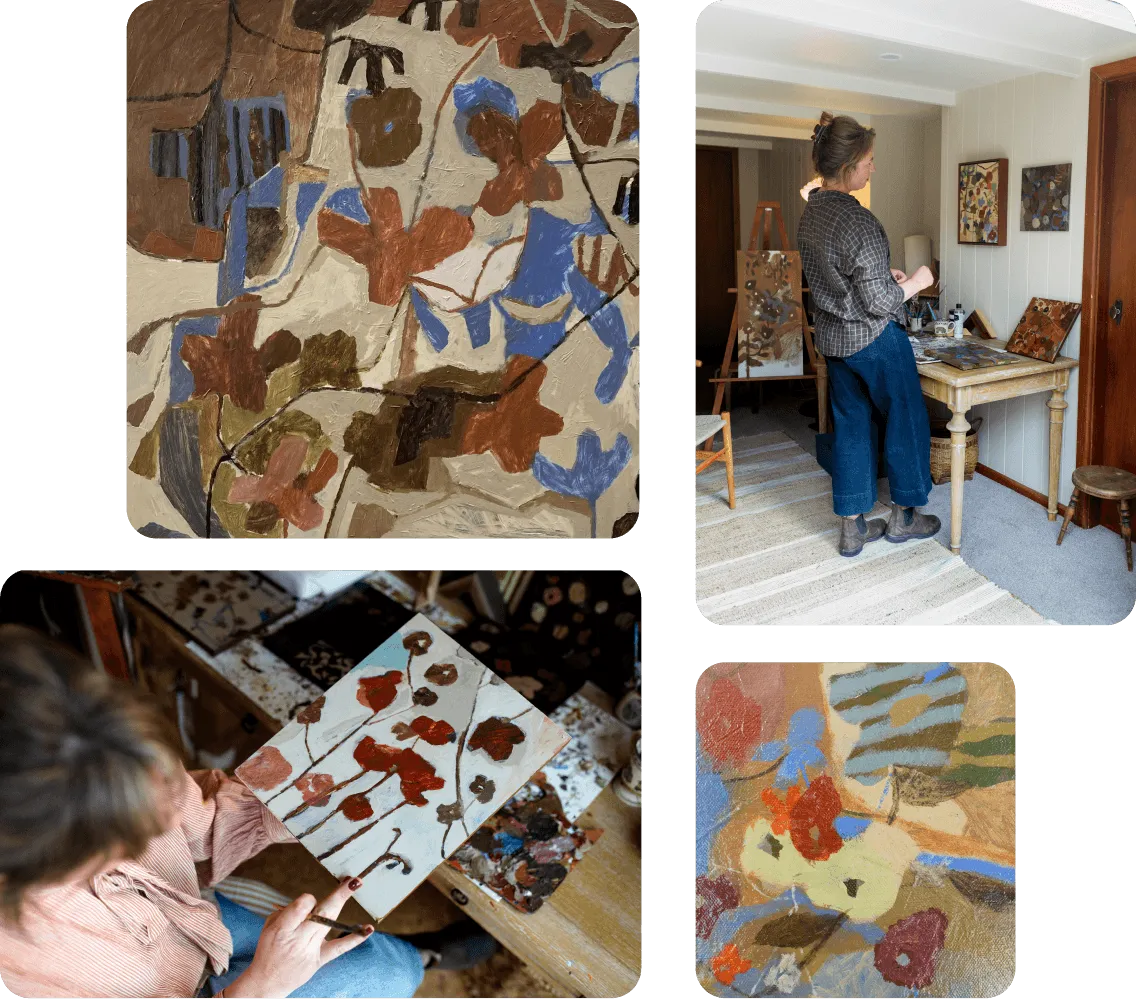
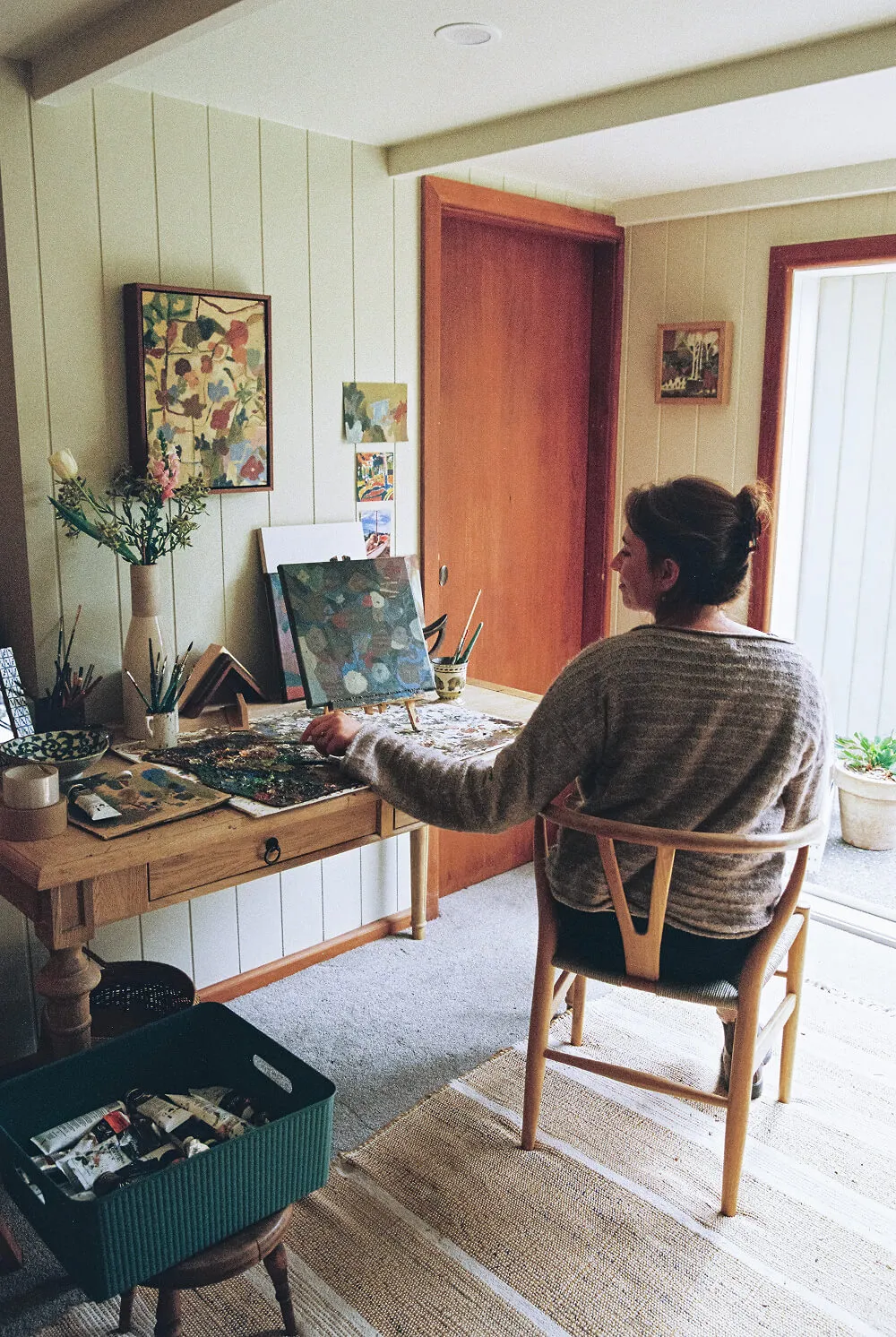
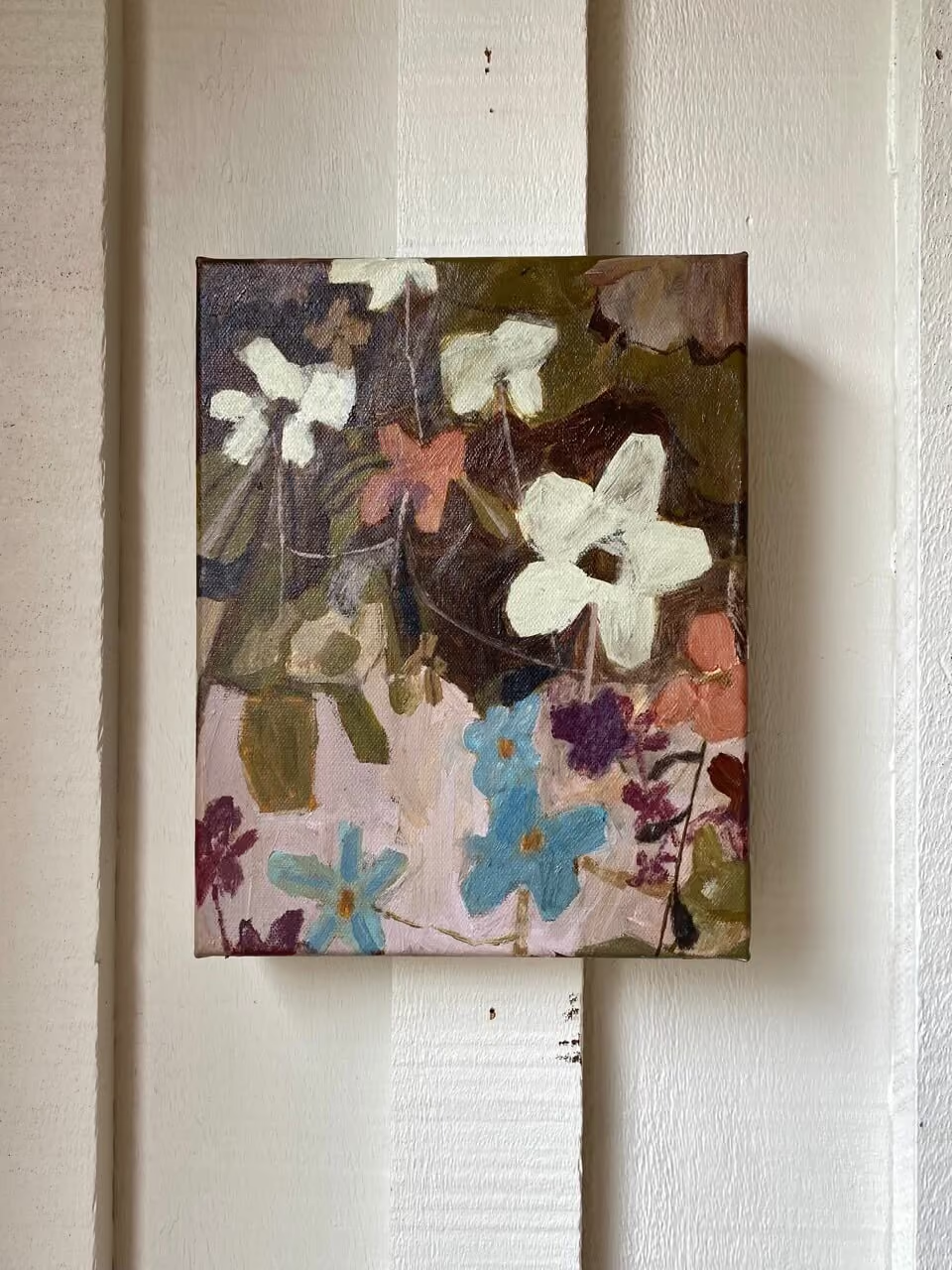
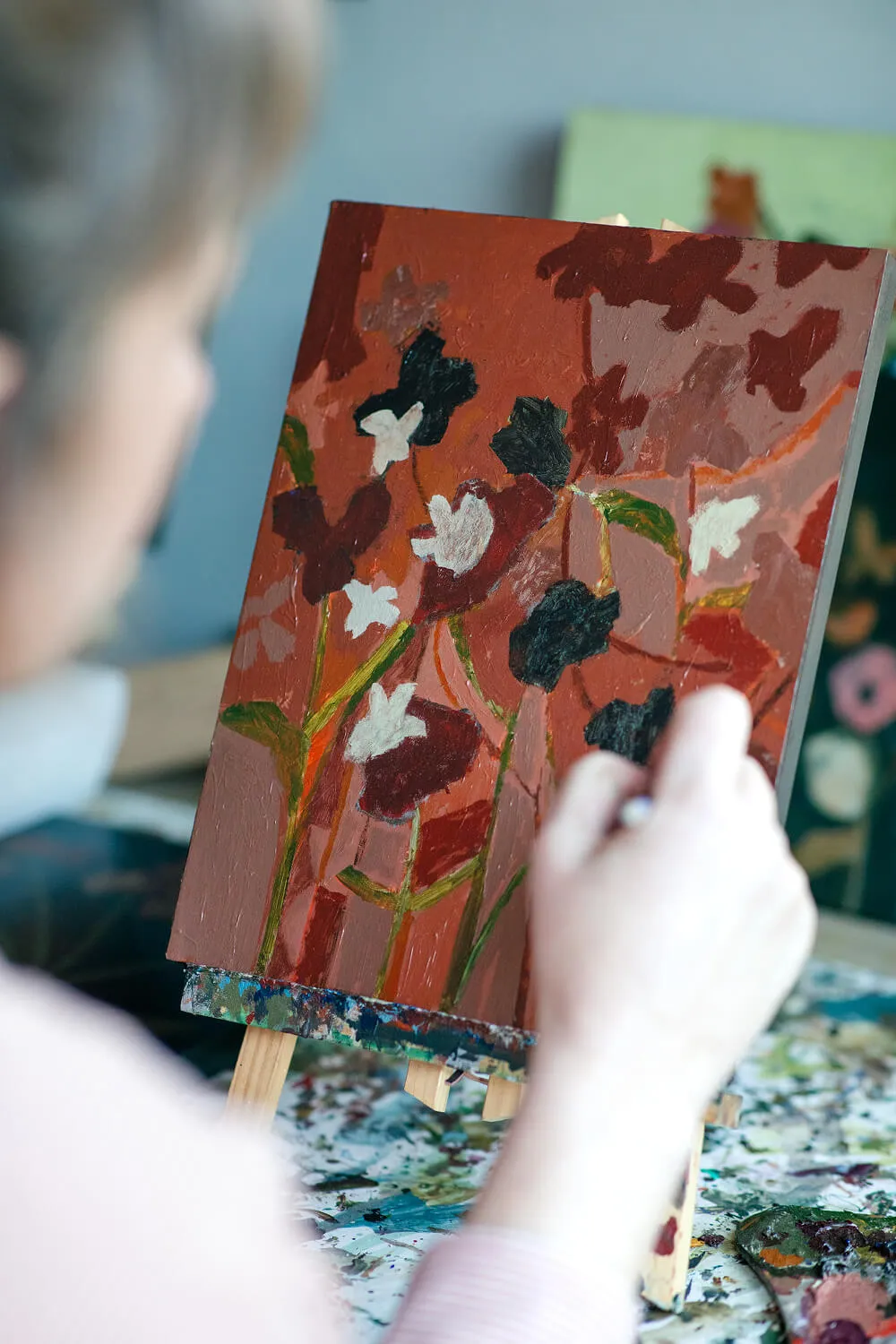
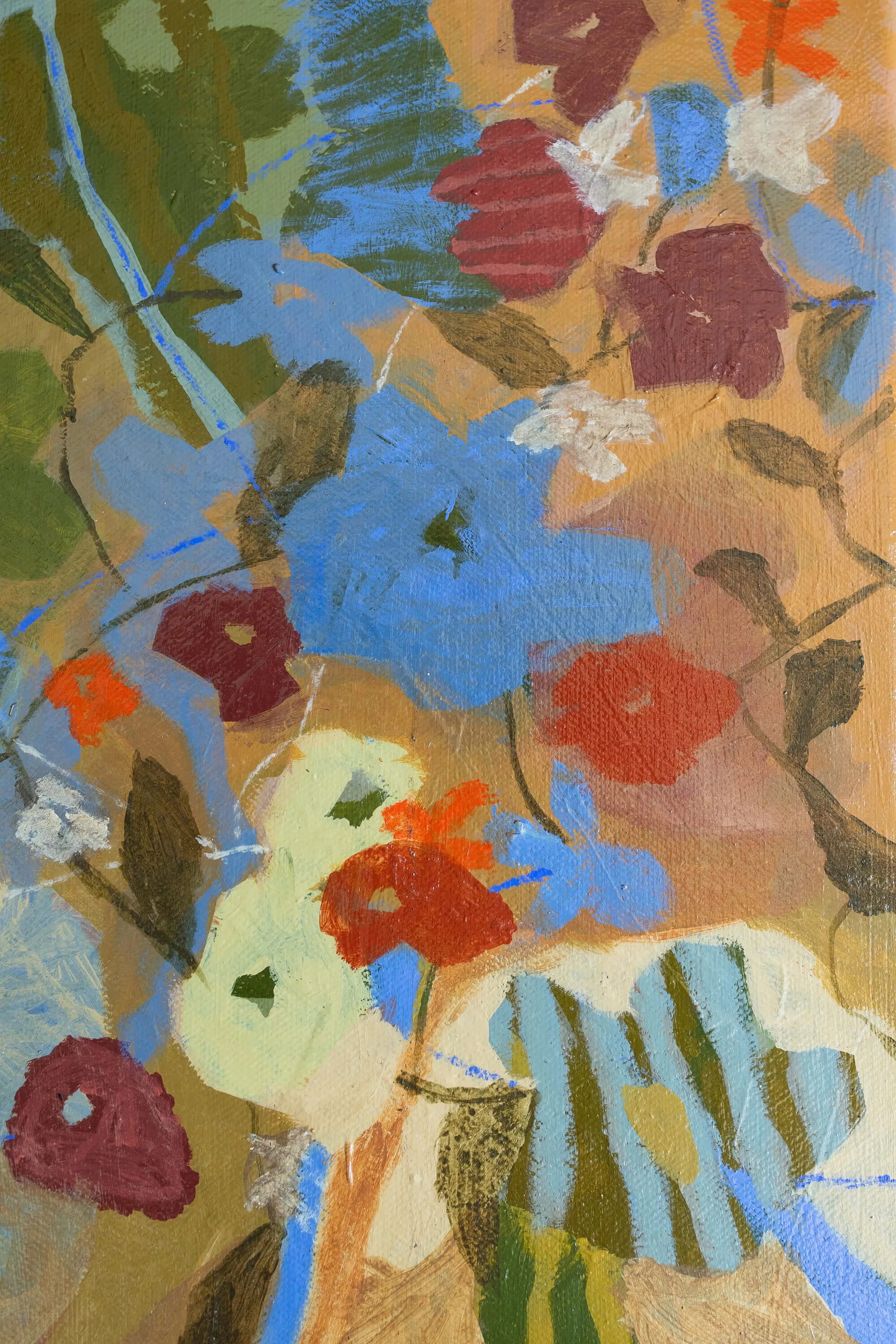
Collage of four images: an abstract painting with earthy tones and blue shapes, a woman standing in an art studio looking at paintings on the wall, a woman seated holding a painting of red flowers, and a close-up of a colorful abstract painting with various shapes and colors.
Join Now
Lifetime Access | Online Course

Launch Discount Expires In:

00
Days
:
00
Hrs
:
00
Min
:
00
Sec
Collage of four images: an abstract painting with earthy tones and blue shapes, a woman standing in an art studio looking at paintings on the wall, a woman seated holding a painting of red flowers, and a close-up of a colorful abstract painting with various shapes and colors.

Paint without a plan. Finish in an afternoon.

Gabriella Voogt has spent years developing a process that removes the two things that stop most painters: the blank surface that demands an idea first, and the fear of ruining work you've already made. She begins every painting with no composition in mind, builds a history into the surface, takes most of it away again — and finds the flower in what's left.

A woman with her hair in a bun sits on a wooden chair in a cozy room, facing a wooden table with painting supplies including brushes, a palette, and a canvas on an easel showing a floral artwork. The room has light-colored vertical panel walls adorned with framed and pinned artwork. A vase with flowers sits on the table, and there is a green basket with paint tubes below the table.

What You'll Experience

Sit at Gabriella's desk and follow her complete process on a single painting — from a board covered fast with colour she hasn't thought about, to a resolved petite floral with fine line work connecting it corner to corner.

An artist's hand working on a dark floral painting on a small wooden easel, surrounded by other similar paintings and a paint-splattered table with brushes and palettes.
A person painting an abstract floral artwork with red, black, white, and green colors on a small canvas set on an easel.
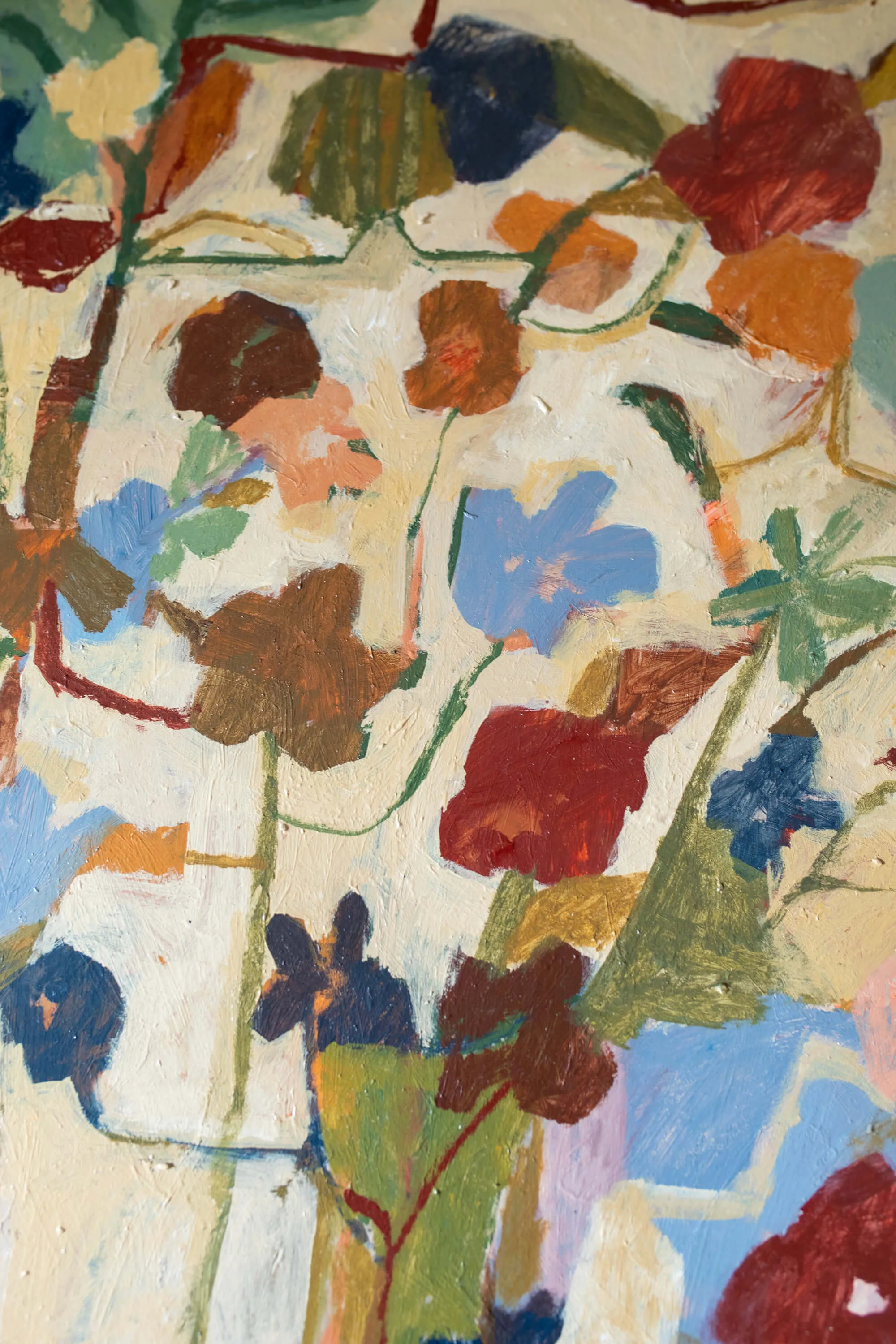
Abstract floral painting with layers of blue, red, and white flowers, various green leaves, and a background of brown and beige tones.
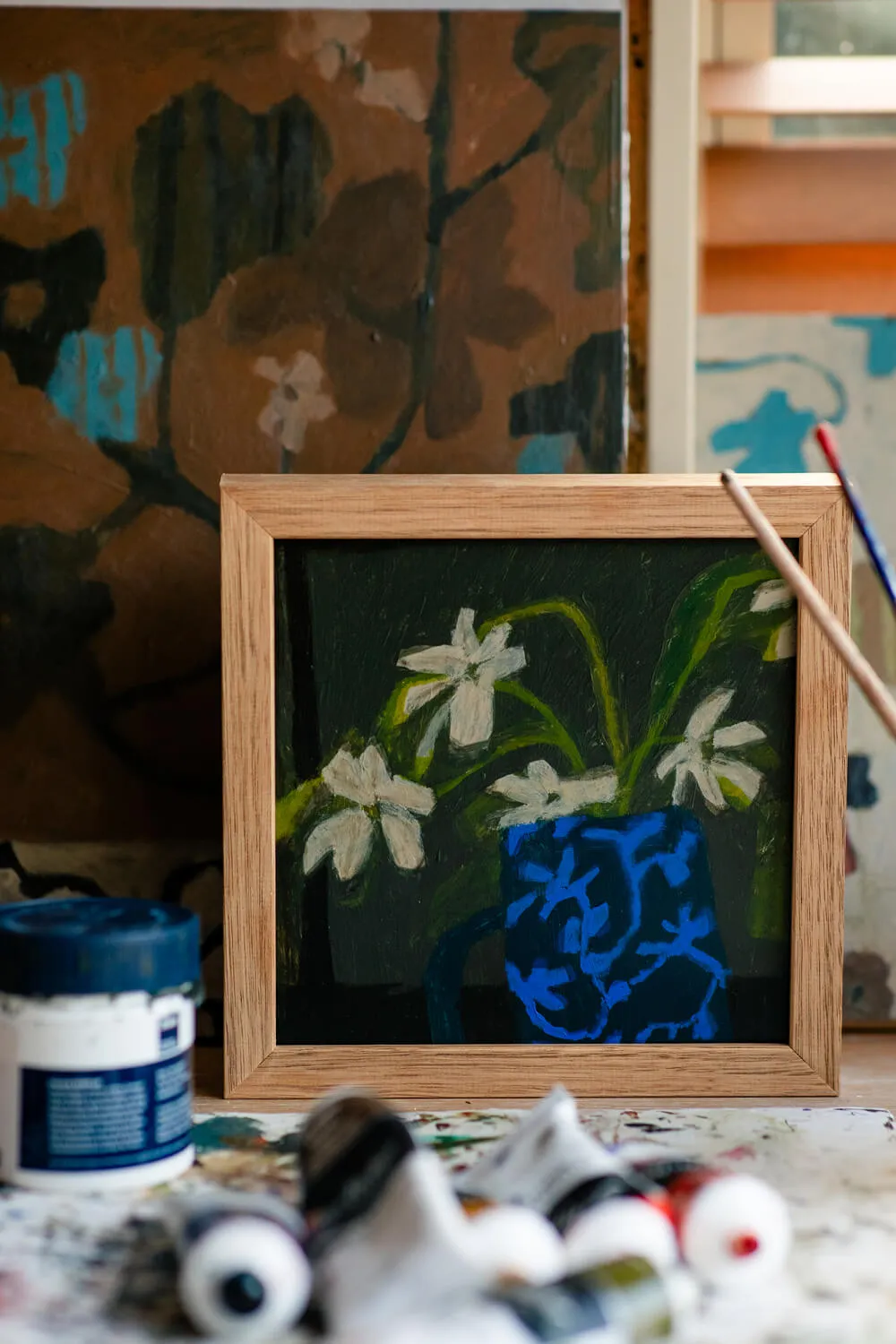
Framed painting of white flowers with green stems in a blue patterned vase, surrounded by painting supplies on a wooden surface with other artwork in the background.

What You’ll Learn

A person wearing a beige sweater is reaching for a paintbrush from a container on a wooden table with painting supplies, including a paint palette with mixed colors, a tube of paint, containers with brushes and pencils, a decorative bowl, and a white vase holding light-colored flowers; a canvas on an easel is in the background near a window.

Why beginning without a plan produces work that looks more considered, not less

How to build layers that stay partly visible, so a thirty-centimetre piece carries real depth

Gabriella's mark-making in full — the brush, the pressure, the direction, the consistency of the paint

How to wash an area back, and when to block one out entirely with opaque colour

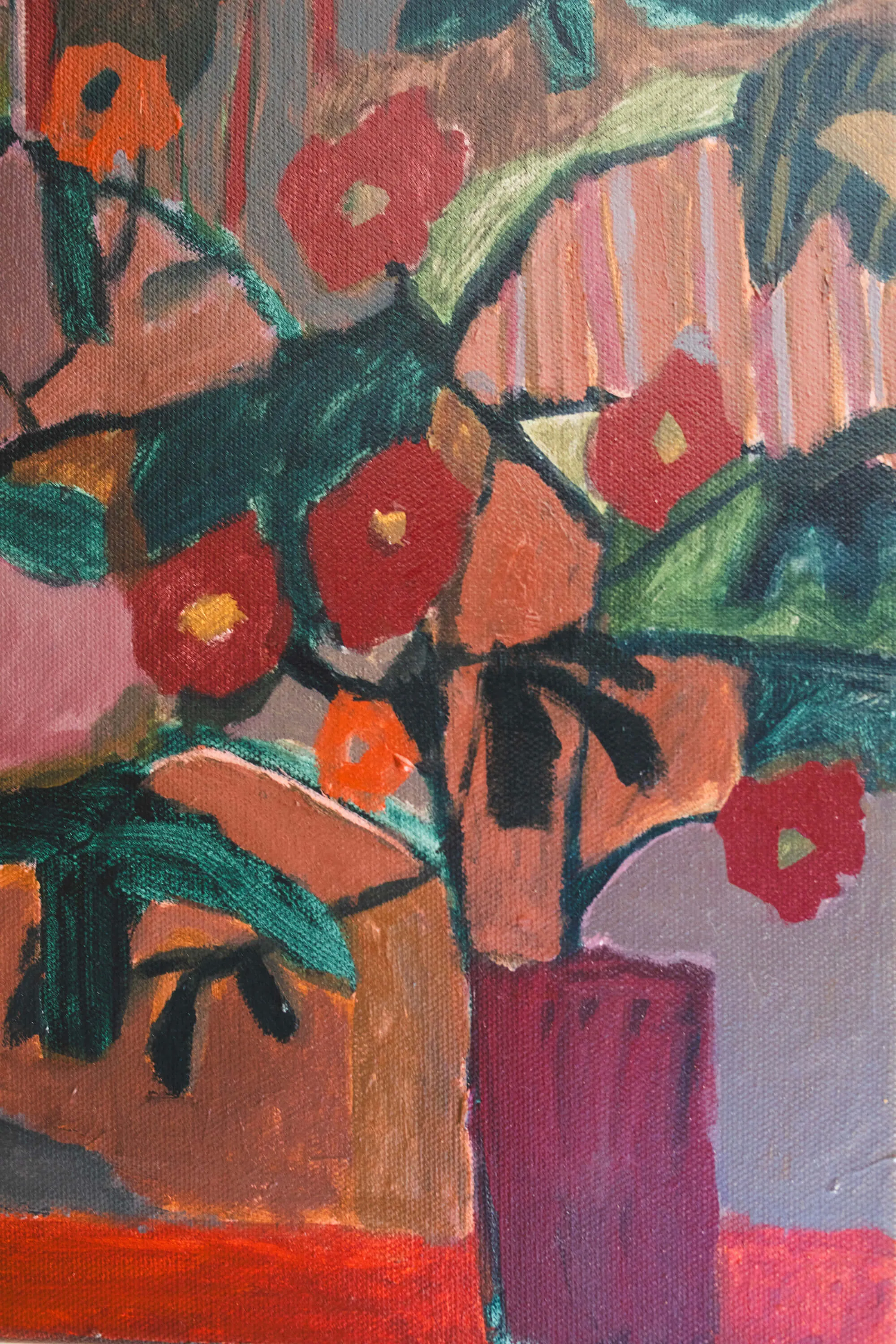
How to find a flower inside an abstract surface instead of drawing one onto it

How to finish a piece with fine line work — stems, connection, and the dark edge that ends it
What's Inside

Carefully crafted modules that take you inside Gabriella's complete process — from the first unplanned mark to a finished petite floral on a thirty-centimetre board.

A woman with short hair wearing a patterned beige blouse sits at a wooden table, hands clasped, in front of a wall with five colorful abstract paintings arranged in a row.

Introduction

Gabriella introduces herself and what a petite floral actually is.

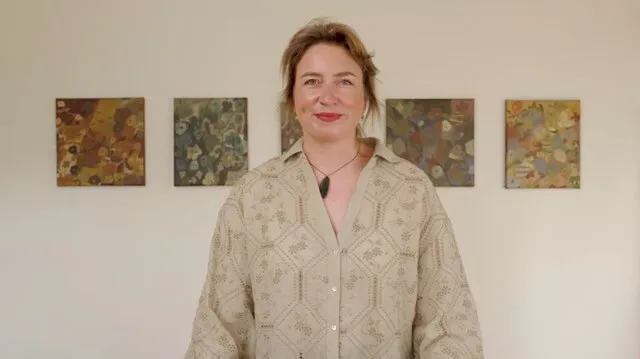
A woman with light brown hair tied back, wearing a beige patterned shirt and a black necklace with a pendant, standing indoors in front of a white wall with three abstract paintings.

Gabriella's Creative Approach

Why florals, why small, and the loop of adding, removing and finding that sits under every decision she makes.

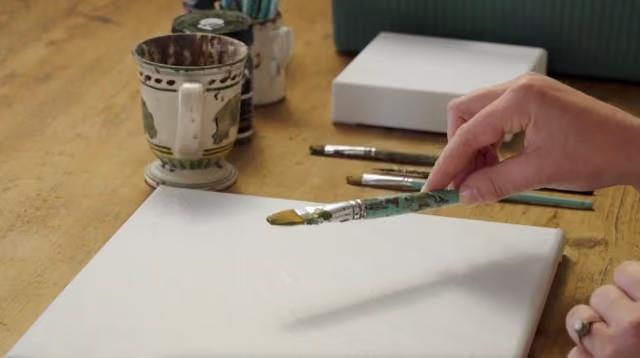
Hand holding a paintbrush above a blank white canvas on a wooden table, with a decorative mug and other painting brushes nearby.

Tools & Materials

A straightforward walkthrough of the whole kit.

Person using a flat paintbrush to apply brown paint on a blank white canvas on a wooden table, with several tubes of paint and brushes nearby.

Brushwork & Mark-Making

Every mark named and demonstrated, and how to develop your own.

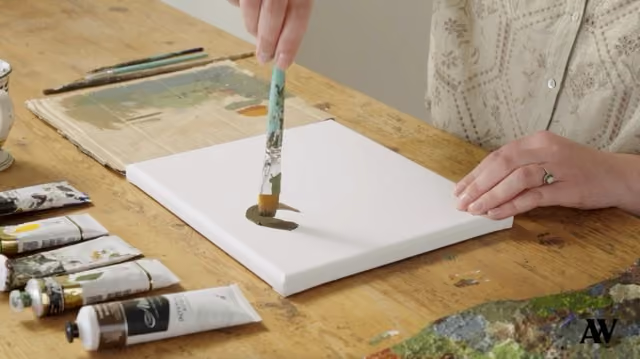
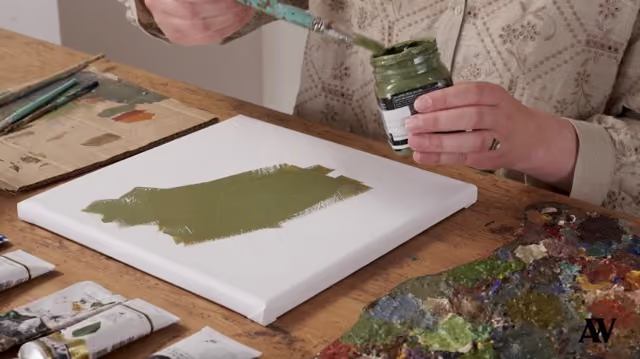
Person applying green paint with a brush onto a white canvas on a wooden table, surrounded by paint tubes, a colorful palette, and brushes.

Layer One: Permission to Make a Mess

The mindset that makes it possible.

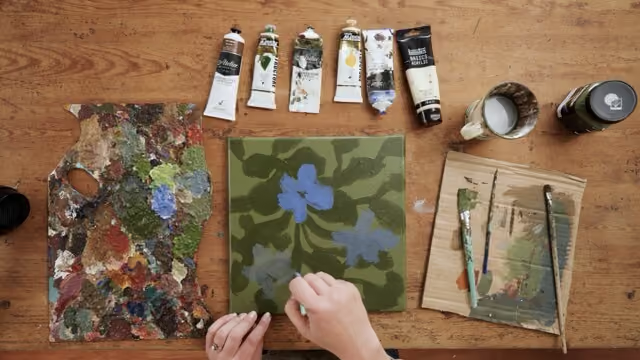
Artist painting blue flowers with green leaves on a canvas placed on a wooden table, surrounded by paint tubes, brushes, a paint palette, a cup of water, and a jar of black paint.

Building the History

Thinning with water, dragging a dry brush over dry paint, where depth actually comes from.

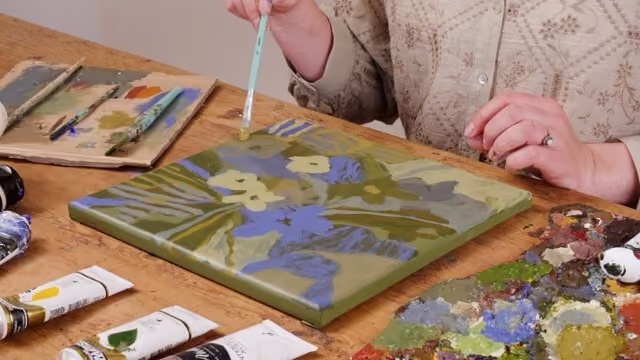
Person painting a floral design with blue and yellow flowers on a canvas using a small paintbrush, surrounded by paint tubes and a palette with mixed colors on a wooden table.

 Peeling It Back

Washing areas back so they stay half-visible and blocking others out entirely. The most distinctive part of the process, and the hardest.

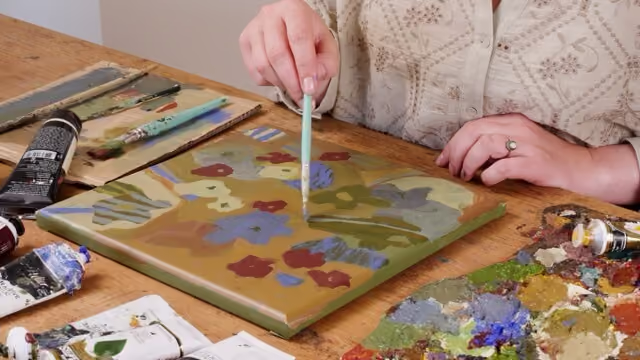
Person painting floral shapes in green, blue, and red on a canvas laid on a wooden table, surrounded by various paint tubes and brushes.

Finding the Image

Looking into the layers to find flowers rather than drawing them, and refining until a composition exists that was never planned.

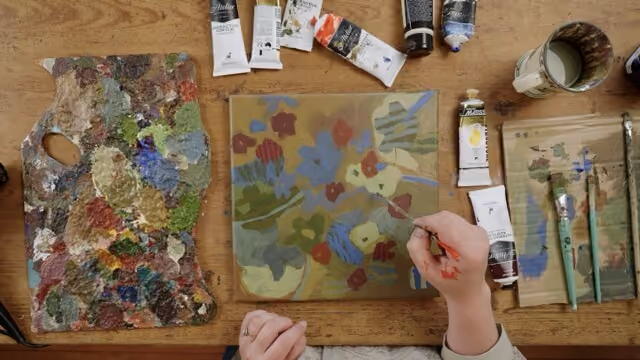
Overhead view of hands painting a floral design with blue, green, red, and yellow colors on a square canvas; nearby are paint tubes, a paint palette covered in mixed colors, brushes on a plastic sheet, and a cup with paint residue on a wooden table.

Line Work & Connection

The fine brush. Stems that join a flower in one corner to one in the other, and the dark edge that separates a study from a finished piece.

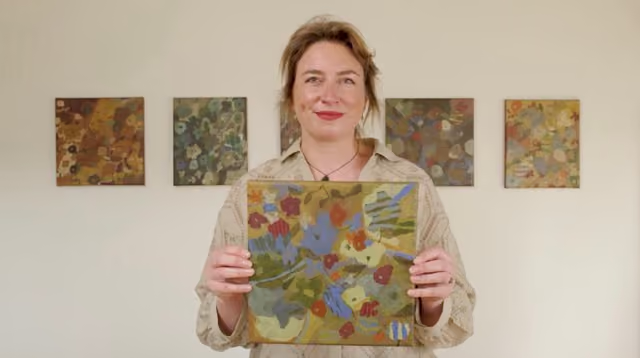
A woman with short brown hair sits at a wooden table with a smile, wearing a beige patterned shirt and a black pendant necklace; next to her on the table is a small easel holding a floral painting with colorful flowers and greenery; behind her on the wall are five square floral paintings in various colors.

Summary & Closing

Gabriella's closing thoughts on practice, and what to carry back to your own desk this week.

Meet The Artist

Gabriella Voogt

Gabriella Voogt is a Christchurch-based painter whose petite florals. She came to painting from graphic design, and that training is still visible in how a piece gets resolved: composition, contrast and scale are deliberate decisions, even though the painting itself begins with none of them in mind. She sells her work directly, by auction, to the people who want to live with it.

“My drive is accessible art.”

Finding the Flower is the first time Gabriella's complete process has been filmed start to finish on a single painting. It covers everything from the first unplanned layer to the last line, and it's built on the conviction that you do not need to know what you are making in order to make something good.

A woman with light brown hair and wearing a dark checkered shirt sits at a wooden table in an art studio, surrounded by floral-themed paintings on the walls and leaning against the table.
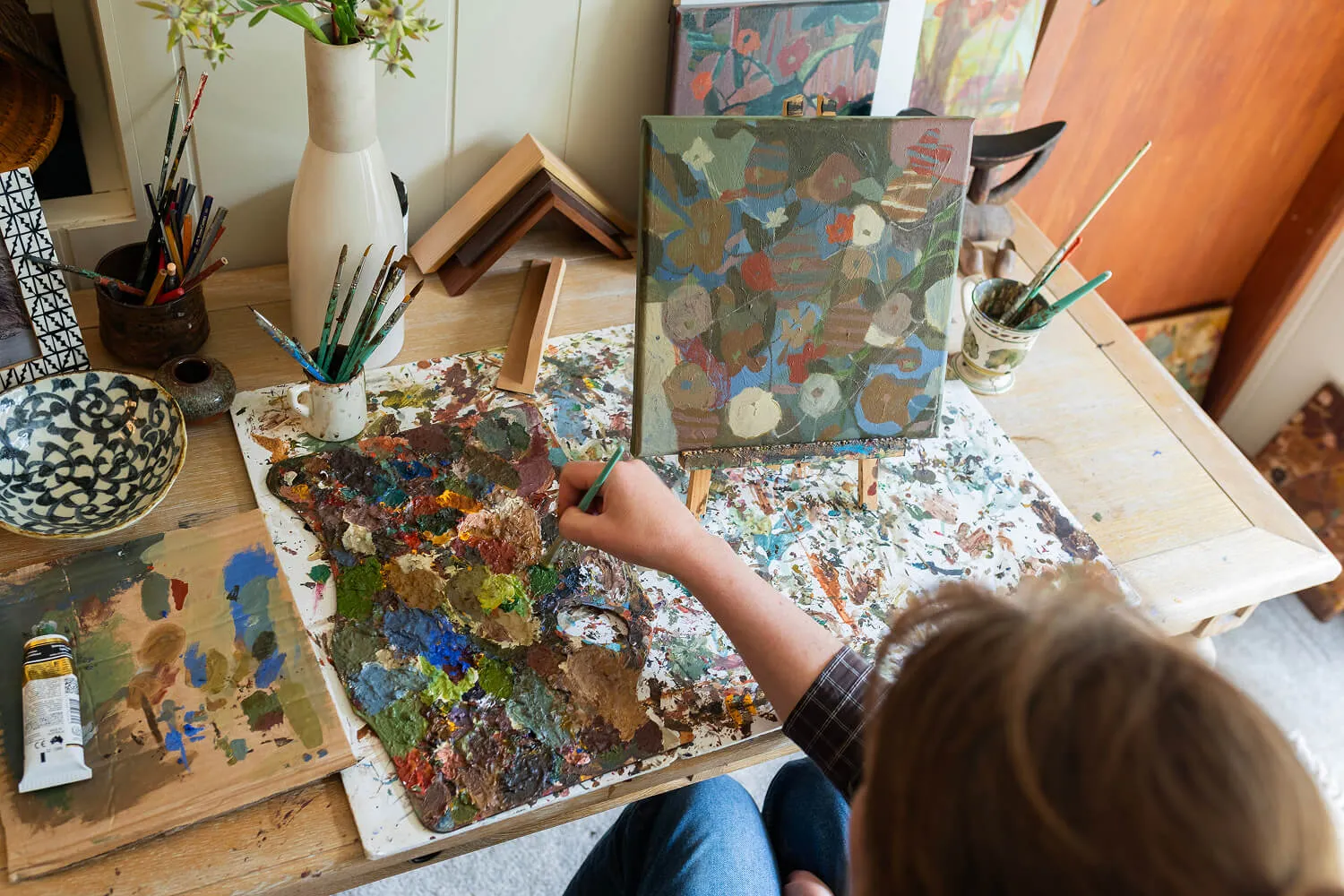
Person holding a paintbrush and mixing colors on a paint palette at a wooden table with art supplies and a small floral abstract painting on an easel.

Who This Is For

Painters who want to paint more but have no studio, no space, and no appetite for setting up and packing down

Anyone who freezes at a blank surface because they feel they should know what they're making first

Artists with half-finished canvases they stopped touching weeks ago

Experienced painters whose work has become tight and careful, looking for a way back to instinct

Anyone who loves colour and texture more than realism, and wants a flower that doesn't have to look like one

Whatever your starting point, this course will give you a way to finish something this week — and the week after that.

What’s Included

Instant & Unlimited Lifetime Access 

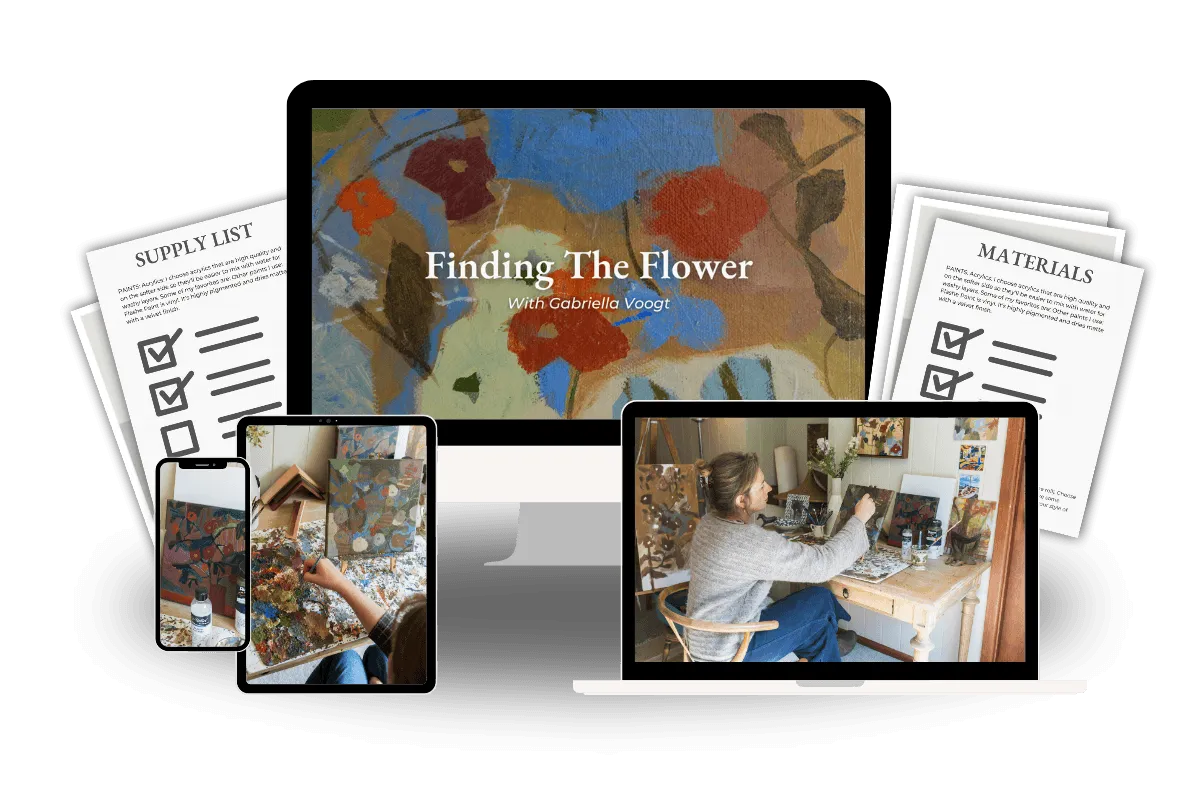
Digital artwork showing multiple devices featuring the art course 'Finding The Flower with Gabriella Voogt': a desktop with a floral painting and title, a laptop with a woman painting at a desk, a tablet showing a close-up of hands painting, and a phone displaying a bottle and brushes, accompanied by checkmarked supply list and materials sheets.
Lifetime access to all 10 modules and 2 bonus modules
Ask Gabriella questions directly in the comments
Downloadable materials list so you can gather everything before you begin
Access to the private Arteway student community

Join Finding the Flower

Save for a limited time only

Normal Price: $147

Today's Price: $67 USD

Launch discount expires soon!

00
Days
:
00
Hrs
:
00
Min
:
00
Sec
payment cards

100% Satisfaction Guaranteed

100% Satisfaction Guarantee

We're confident you'll love this course. If you give it a try and feel it's not right for you, just contact us within 14 days of purchase and we'll take care of you. Enroll with confidence.

Organic Abstracts | Money back guarantee badge

FREE! Bonus ($70 value)

Included with every order

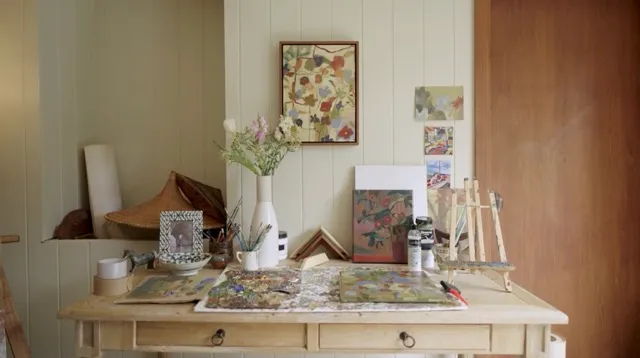
Cozy artist's workspace with a wooden table holding painting supplies and canvases, a wooden chair, and a floor lamp, against shiplap walls decorated with floral paintings and a vase of flowers. A mirror with a dark sunburst frame hangs on the far wall near a closed wooden door.

The Desk Tour

$35 value / FREE!

A walkthrough of the real working footprint

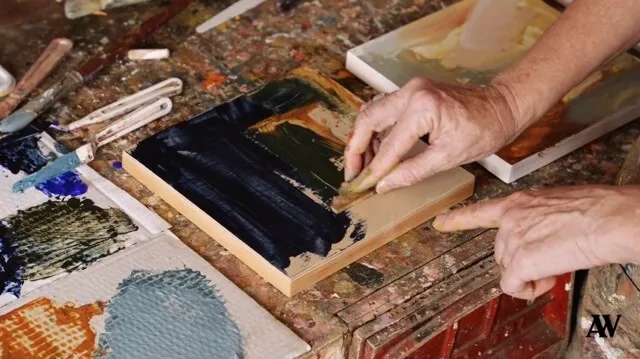
Two hands working on a small wooden panel with black paint being spread using a sponge or brush on a paint-splattered wooden table alongside palette knives and paint samples.

Embracing Play and Experimentation, with Louise Knowles

$35 value / FREE!

A guest module from Louise Knowles, included free. Louise makes the case that play and experimentation aren’t optional extras but the entire point, and shows you what that looks like in practice.

FAQ

A gessoed board or canvas around 30 × 30cm, three brushes — one large for laying colour down, one fine for line work, and one old scratchy one for texture — and five colours at most.

No. The process starts by covering a surface quickly with no plan, which is as accessible a starting point as painting has. If you're already experienced, the value sits in the middle of the course — the layering and the editing — rather than the first module.

Pre-recorded, so you can work through it at your own pace and return to any module whenever you need it. You can ask Gabriella questions in the comments at any time.

Lifetime access. The course is yours to return to as many times as you like.

If you give it a try and feel it’s not right for you, contact us within 14 days of purchase and we’ll take care of you. Enroll with confidence.

Yes. Finding the Flower is built entirely around small-scale work made in a single sitting with simple materials. Gabriella teaches her signature looping process to develop refined work in an afternoon and shows students how to get into the flow.